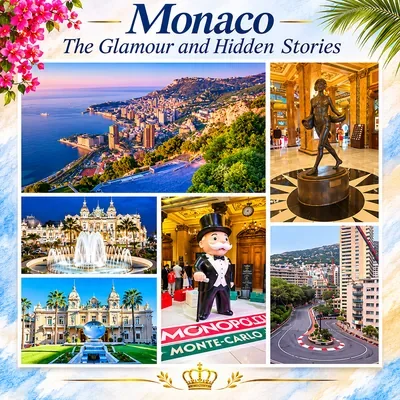
When we dream of the French Riviera, certain images immediately come to mind: the dazzling blue waters of the Mediterranean, sun-soaked beaches, elegant marinas, luxury yachts, and palm-lined promenades.
Stretching from Marseille to Menton near the Italian border, the Côte d’Azur is often considered one of the most glamorous destinations in the world. Yet behind its glittering façade lies a fascinating history filled with ambition, fortune, tragedy, and intrigue. Few places embody this contrast better than Monaco.
A Tiny Country in the Spotlight
Although many people associate Monaco closely with France, it is an independent sovereign state. Covering just over two square kilometers and home to around 35,000 residents, it is one of the smallest countries in the world—and one of the wealthiest.
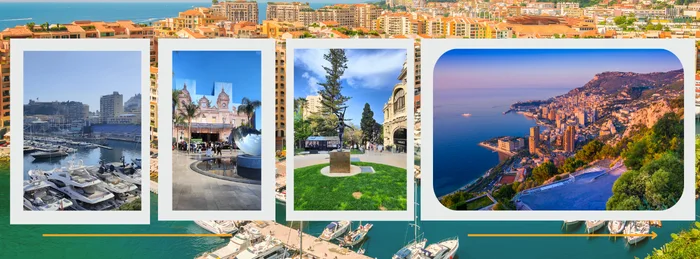
The Principality has its own government, holds a seat at the United Nations, and has long attracted the global elite thanks to its favorable tax system, political stability, and exceptional Mediterranean lifestyle.
Monaco’s story began more than seven centuries ago when the Grimaldi family acquired the territory. Remarkably, the same dynasty continues to rule the Principality today, making it one of the oldest reigning families in Europe.
The Birth of Monte Carlo
By the mid-19th century, Monaco was facing serious financial difficulties. The future of the tiny state looked uncertain.
Everything changed with the arrival of François Blanc, a brilliant French entrepreneur who recognized the extraordinary potential of gaming and entertainment.

Blanc acquired a rocky stretch of undeveloped coastline and transformed it into what would become the legendary Monte Carlo Casino. Alongside the casino, he built an opera house and successfully encouraged the expansion of the railway line from Nice to Monaco.
The result was revolutionary. Wealthy aristocrats, adventurers, and high society travelers began flocking to the Riviera, turning Monaco into one of Europe's most fashionable destinations almost overnight.
The Man Who Broke the Bank
One of Monte Carlo’s most colorful characters was Charles Wells, an English gambler whose name became legendary in the late nineteenth century.
Wells achieved a series of astonishing winning streaks at the casino, reportedly "breaking the bank" several times. Visitors followed his every move, copied his bets, and believed he had discovered the secret to beating fortune itself.
For a brief period, he became a celebrity. His victories inspired songs, headlines, and endless speculation.
Yet his story serves as a reminder of Monte Carlo’s dual nature. Wealth and success proved fleeting. Wells eventually lost his fortune, faced financial troubles, and died largely forgotten.

His rise and fall perfectly illustrate the fine line between triumph and disaster that has always existed in the world of gambling.
The Princess Who Came from Hollywood
Monaco’s international image was transformed forever by another remarkable story.
In 1955, Hollywood star Grace Kelly visited the Principality during a film-related trip. Already an Academy Award-winning actress, she met Prince Rainier III, and the encounter soon blossomed into one of the most famous romances of the twentieth century.
Their wedding in 1956 captured the attention of the entire world.
The daughter of a Philadelphia family became a real-life princess, and Monaco suddenly embodied the ultimate fairy tale. Grace Kelly’s elegance, beauty, and sophistication elevated the Principality’s prestige and helped define its image for generations.
Sadly, the story ended in tragedy. In 1982, Grace Kelly was involved in a car accident on the winding roads above Monaco. She never recovered from her injuries, and her death shocked admirers around the world.
Monaco Today
Today, Monaco remains a global symbol of luxury, elegance, and Mediterranean living.
The annual Monaco Grand Prix continues to be one of the most prestigious events in motorsport, while the Monte Carlo Rally attracts competitors and spectators from across the globe.
From the viewpoints near the Prince’s Palace, visitors enjoy spectacular panoramas over Port Hercule, where some of the world’s most impressive yachts are moored against a backdrop of sparkling blue water.
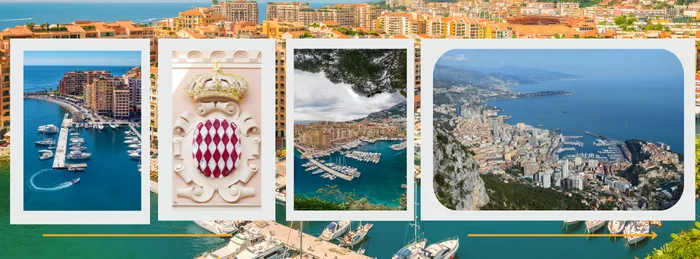
Yet Monaco offers much more than glamour. Historic streets, beautiful gardens, cultural institutions, and breathtaking coastal scenery provide memorable experiences for every visitor.
More Than a Postcard
At first glance, Monaco appears almost unreal—a perfect postcard destination bathed in Mediterranean sunshine.
Look a little closer, however, and you discover stories of visionaries, gamblers, princes, artists, and movie stars. Stories of ambition, success, risk, and loss. Stories that reveal the human side behind the glittering façade.
Perhaps that is what makes Monaco so fascinating.
It is not simply a destination defined by wealth and luxury. It is a place where dreams have been created, pursued, and sometimes lost—a place where history and glamour continue to meet beneath the endless blue skies of the French Riviera.