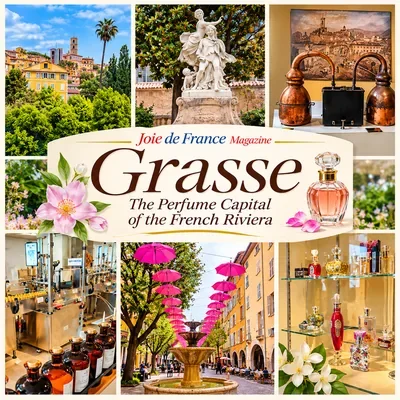
Perched in the hills above the French Riviera, the town of Grasse is often introduced as the world’s perfume capital. It’s a title that sounds almost poetic - yet its origins are far less romantic.
Grasse did not begin as a place of delicate scents and refined luxury. For centuries, it was a working town shaped by the leather trade. Tanneries dominated daily life, and with them came a persistent, heavy smell that lingered in the streets. What transformed this reality into opportunity was not ambition, but necessity.
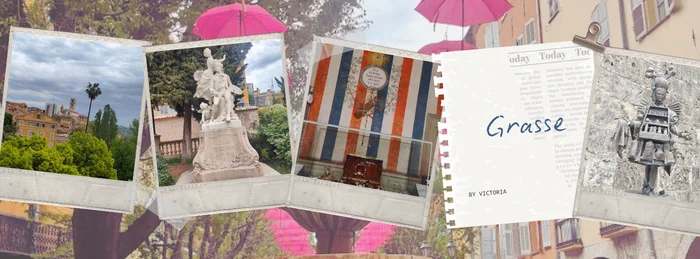
In the 16th century, a simple yet ingenious idea changed everything. When perfumed gloves were created for Catherine de’ Medici, floral essences were used to mask the odor of leather. The result was an instant success among the French aristocracy. What began as a practical solution soon evolved into a cultural phenomenon - and with it, the identity of an entire town shifted.
A Landscape Shaped by Fragrance
Today, Grasse feels inseparable from scent. The surrounding hills are not just scenic - they are productive landscapes where jasmine, rose, lavender, and orange blossom are cultivated with precision and care. These flowers are not decorative; they are essential. They form the foundation of some of the most iconic perfumes in the world.
Each year, tons of jasmine are harvested in the region, often picked at dawn when the fragrance is at its most intense. The process is still deeply rooted in tradition, requiring both speed and sensitivity. It is here, in these quiet fields, that the global luxury perfume industry begins - far from boutiques and polished counters.
Inside the World of Perfume
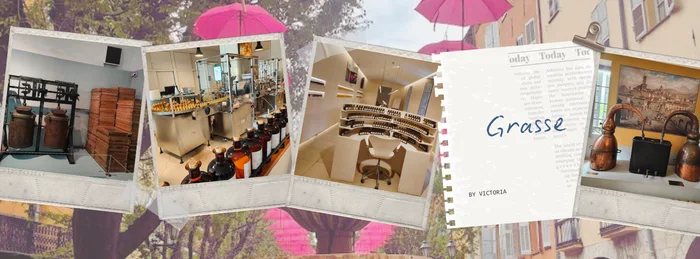
To understand Grasse, you have to understand the craft behind it. The International Perfume Museum offers exactly that: a journey through the history, science, and artistry of fragrance.
Rather than simply displaying objects, the museum invites visitors to engage their senses. You move through spaces filled with scent, learning how raw materials are transformed into complex compositions. It also introduces one of the most fascinating roles in this world - the “nose,” a master perfumer capable of recognizing and memorizing thousands of individual scents.
Perfume creation is structured, yet deeply intuitive. Every fragrance is built in layers:
- top notes, which appear first and fade quickly
- heart notes, which define the character
- base notes, which linger and give depth
It is a process that sits somewhere between chemistry and art - precise, yet impossible to fully standardize.
The Houses That Define Grasse
Grasse’s legacy is carried forward by historic perfume houses that continue to operate today. Names like Galimard, Molinard, and Fragonard are not just brands, but institutions.
These houses open their doors to visitors, offering guided tours that reveal the full production process - from extraction and distillation to blending and bottling. In many cases, you can go a step further and create your own fragrance, guided by experts who understand the delicate balance between notes.
It becomes clear very quickly: perfume is not simply a product. It is composition, memory, and identity combined.
A Global Palette of Scents
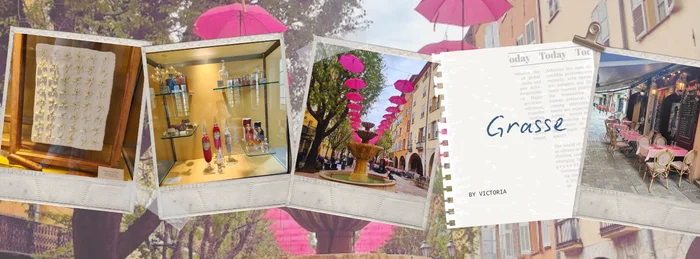
What makes Grasse truly unique is its ability to bring together ingredients from across the world. While local flowers remain essential, the palette extends far beyond Provence.
Turkish roses, Calabrian bergamot, Madagascan ylang-ylang, Indian Ocean vanilla, Somali frankincense - all find their way into blends created here. The result is a global language of scent, composed in a small town overlooking the Mediterranean.
Even the word “perfume” reflects this long history. Derived from the Latin per fumum, meaning “through smoke,” it points back to ancient rituals where aromatic materials were burned as offerings - a reminder that fragrance has always been tied to something deeper than aesthetics.
Grasse Today: Subtle, Not Spectacular
Despite its global influence, Grasse does not feel overwhelming. It lacks the polished glamour of nearby coastal cities, and that is precisely its strength.
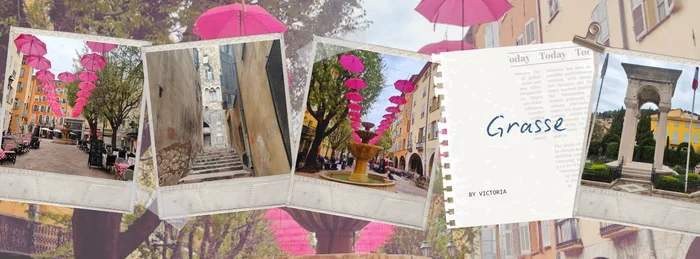
The old town unfolds slowly: narrow streets, pastel façades, small squares, and views stretching toward the sea. There are no grand gestures here - just a quiet continuity between past and present.
Grasse is not a place that demands attention. It reveals itself gradually, much like a well-crafted fragrance. First a note, then another, until the full composition emerges.
And that is exactly why it stays with you.